

Internet, cable TV, and phone provider Cable One (NYSE:CABO) met Wall Street’s revenue expectations in Q2 CY2026, but sales fell by 8.4% year on year to $348.9 million. Its GAAP loss of $204.35 per share was significantly below analysts’ consensus estimates.
Is now the time to buy Cable One? Find out by accessing our full research report, it’s free.
Cable One (CABO) Q2 CY2026 Highlights:
- Revenue: $348.9 million vs analyst estimates of $350.2 million (8.4% year-on-year decline, in line)
- EPS (GAAP): -$204.35 vs analyst estimates of $4.91 (significant miss, included non-cash asset impairment charges of $462.3 million and $456.2 million, net of tax, respectively)
- Adjusted EBITDA: $173.5 million vs analyst estimates of $176.1 million (49.7% margin, 1.5% miss)
- Operating Margin: -150%, down from -128% in the same quarter last year
- Free Cash Flow Margin: 13.4%, down from 20.1% in the same quarter last year
- Residential Data Subscribers: down 62,000 year on year
- Market Capitalization: $246 million
Company Overview
Founded in 1986, Cable One (NYSE:CABO) provides high-speed internet, cable television, and telephone services, primarily in smaller markets across the United States.
Revenue Growth
Examining a company’s long-term performance can provide clues about its quality. Any business can put up a good quarter or two, but the best consistently grow over the long haul. Unfortunately, Cable One struggled to consistently increase demand as its $1.44 billion of sales for the trailing 12 months was close to its revenue five years ago. This wasn’t a great result and suggests it’s a low quality business.
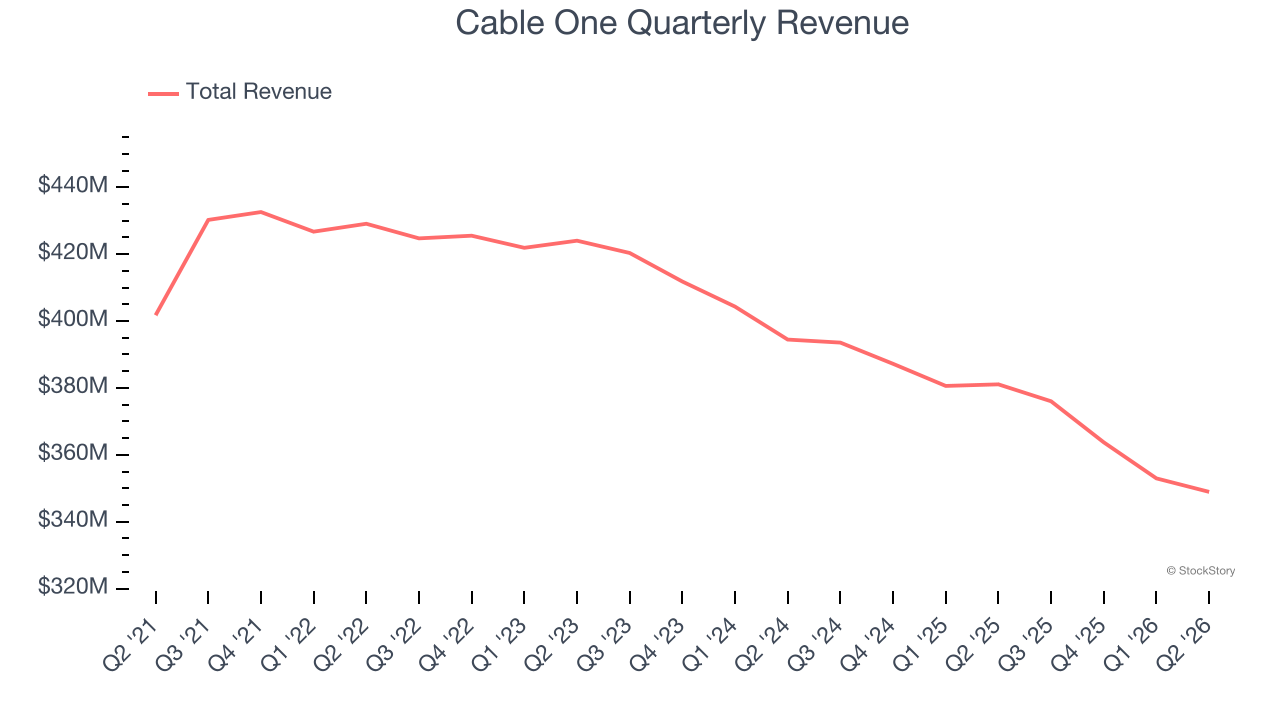
Long-term growth is the most important, but within consumer discretionary, product cycles are short and revenue can be hit-driven due to rapidly changing trends and consumer preferences. Cable One’s recent performance shows its demand remained suppressed as its revenue has declined by 6% annually over the last two years. 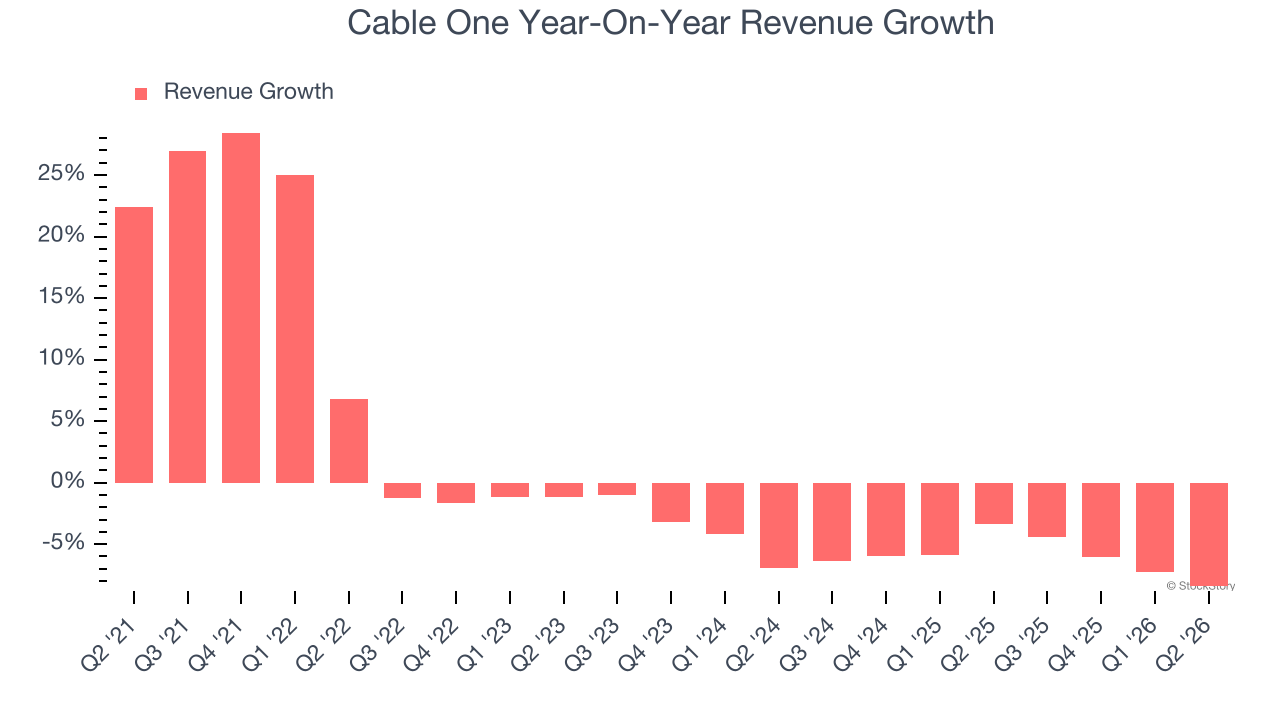
Cable One also discloses its number of residential data subscribers and residential video subscribers, which clocked in at 870,000 and 50,700 in the latest quarter. Over the last two years, Cable One’s residential data subscribers averaged 4.3% year-on-year declines while its residential video subscribers averaged 35.5% year-on-year declines. 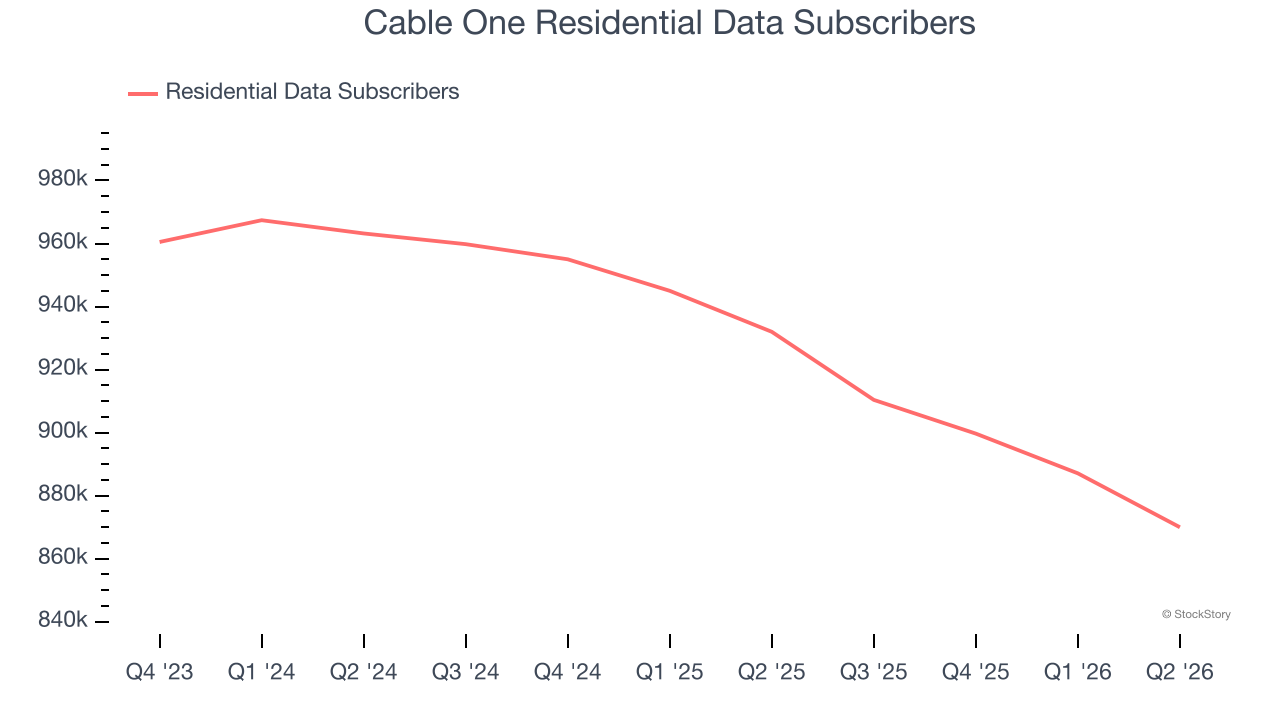
This quarter, Cable One reported a rather uninspiring 8.4% year-on-year revenue decline to $348.9 million of revenue, in line with Wall Street’s estimates.
Looking ahead, sell-side analysts expect revenue to grow 7.9% over the next 12 months. While this projection indicates its newer products and services will fuel better top-line performance, it is still below average for the sector.
ONE MORE THING: The $21 AI Application Stock Wall Street Forgot. While Wall Street obsesses over who’s building AI, one company is already using it to print money. And nobody’s paying attention.
AI chip stocks trade at ridiculous valuations. This company processes a trillion consumer signals monthly using AI and trades at a third of the price. The gap won’t last. The institutions will figure it out. You need to see this first. Read the FREE Report Before They Notice.
Operating Margin
Operating margin is an important measure of profitability as it shows the portion of revenue left after accounting for all core expenses — everything from the cost of goods sold to advertising and wages. It’s also useful for comparing profitability across companies with different levels of debt and tax rates because it excludes interest and taxes.
Cable One’s operating margin has been trending down over the last 12 months and averaged negative 14.5% over the last two years. Unprofitable consumer discretionary companies with falling margins deserve extra scrutiny because they’re spending loads of money to stay relevant, an unsustainable practice.
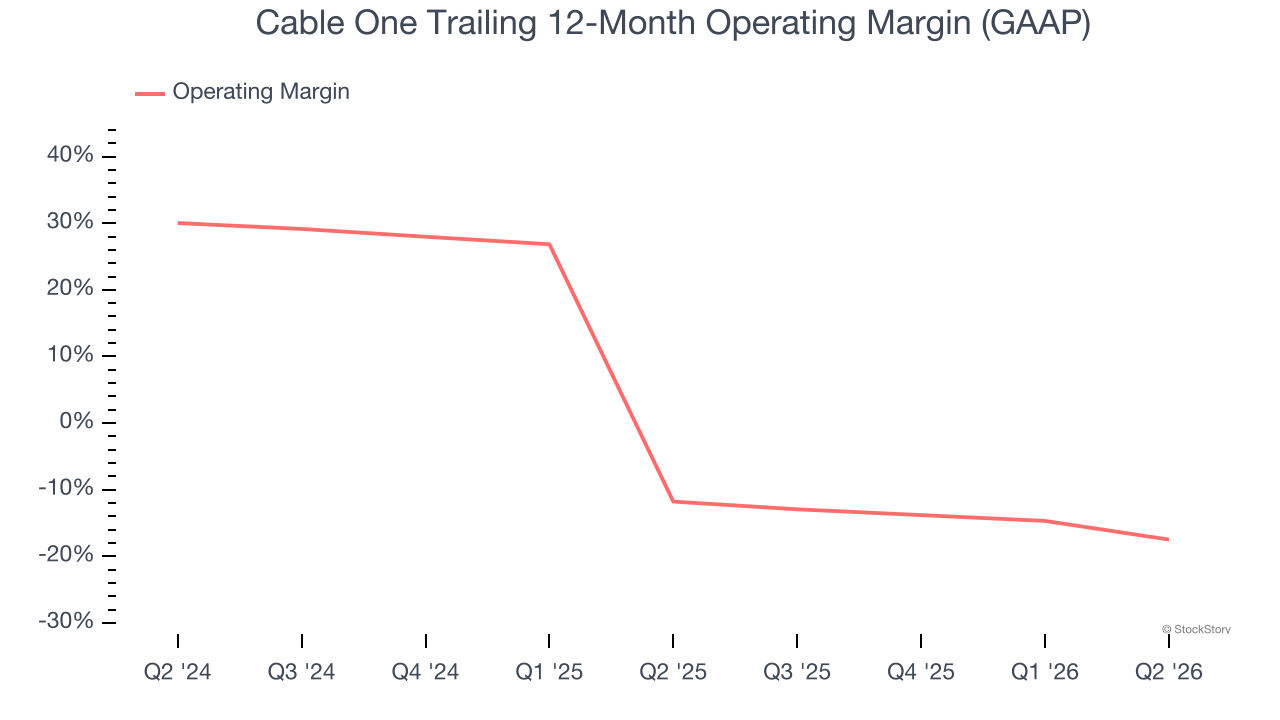
In Q2, Cable One generated a negative 150% operating margin. The company’s consistent lack of profits raises a flag.
Earnings Per Share
We track the long-term change in earnings per share (EPS) for the same reason as long-term revenue growth. Compared to revenue, however, EPS highlights whether a company’s growth is profitable.
Sadly for Cable One, its EPS declined by 39.6% annually over the last five years while its revenue was flat. This tells us the company struggled because its fixed cost base made it difficult to adjust to choppy demand.
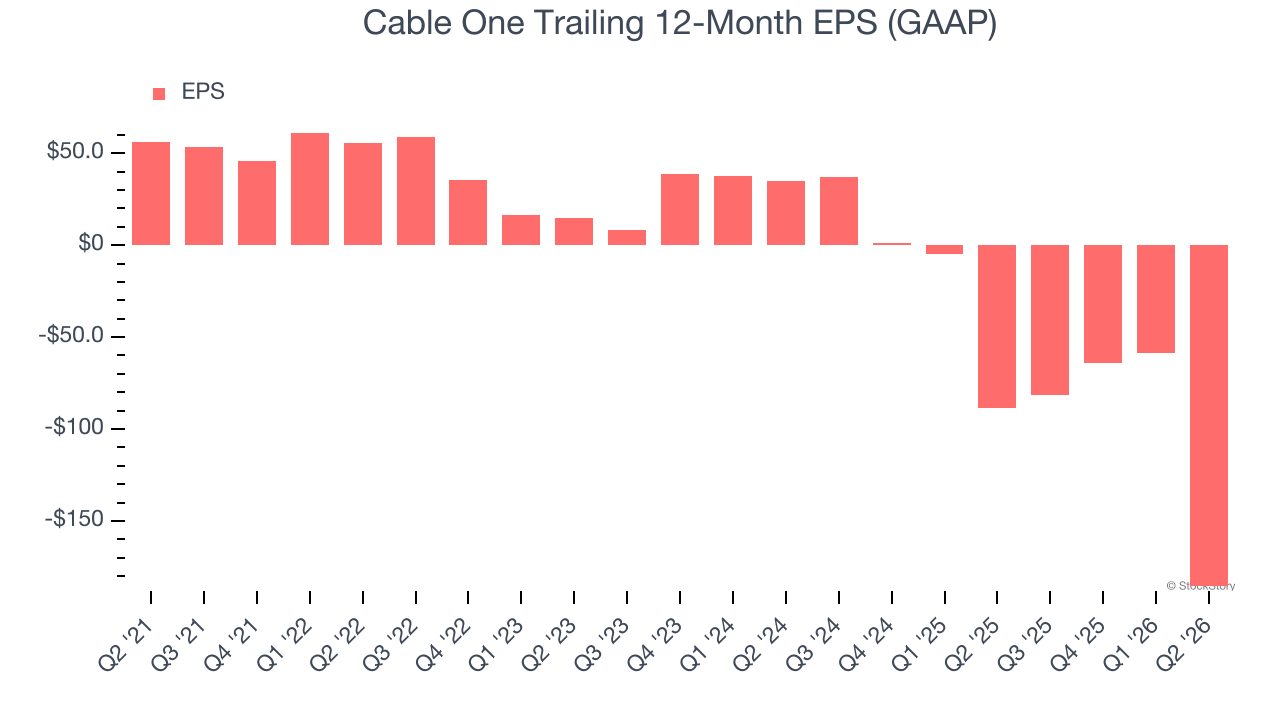
In Q2, Cable One reported EPS of negative $204.35, down from negative $77.70 in the same quarter last year. This print missed analysts’ estimates. Over the next 12 months, Wall Street is optimistic. Analysts forecast Cable One’s full-year EPS will flip from negative $185.56 to positive $23.22.
Key Takeaways from Cable One’s Q2 Results
We struggled to find many positives in these results. Overall, this was a weaker quarter. The stock traded down 4.5% to $42.41 immediately after reporting.
Cable One’s latest earnings report disappointed. One quarter doesn’t define a company’s quality, so let’s explore whether the stock is a buy at the current price. What happened in the latest quarter matters, but not as much as longer-term business quality and valuation, when deciding whether to invest in this stock. We cover that in our actionable full research report which you can read here (it’s free).